
5 JANUARY 2026
Office outlook 2026: can the revival be sustained?
by Robin Marriott, Editor, Green Street News - https://greenstreetnews.com/article/office-outlook-2026-can-the-revival-be-sustained/
Appetite is strong for prime CBD assets but challenges are mounting for holders of second-tier stock
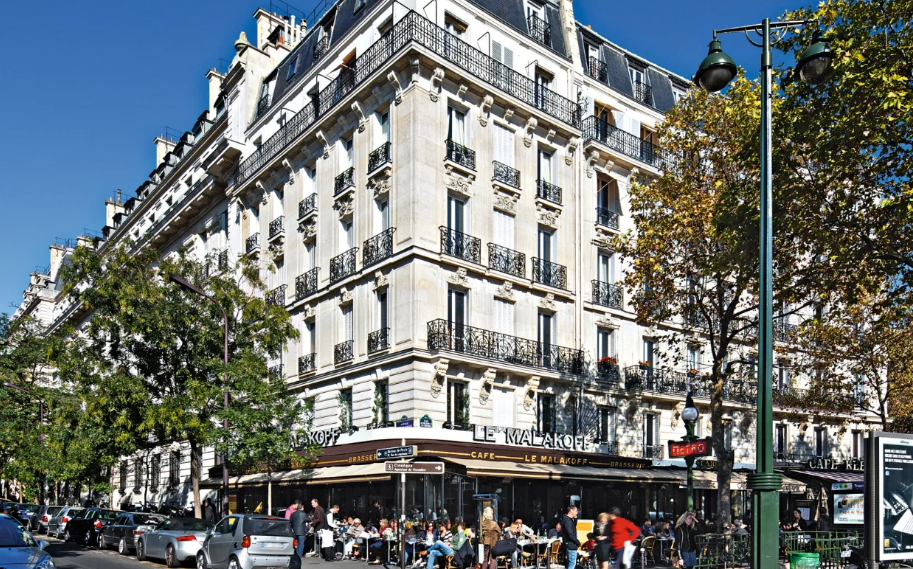
The way so many investors still allocate mainly to logistics and residential property makes offices as a sector feel almost like a contrarian play.
However, Blackstone’s €700m acquisition of the Trocadéro in Paris and those competitive terms from prospective lenders has done something to help alter the narrative as big ticket deals began to return to European offices.
There is no question that investment appetite for prime CBD offices is stronger now than during the previous 12 months.
On the occupancy side, some cities are flourishing. Frankfurt’s CBD had take-up over the first three quarters of 2025 amount to 465,000 sq m (5m sq ft), which is an 82% increase on the prior year period and 51% above the 10-year average.
With BNP Paribas reporting that around €30bn of Europe office transactions were recorded in the first three quarters of 2025 driven mainly by big-ticket deals in the UK, France and Germany, the question is whether this momentum will be carried over to 2026 – and to what extent AI and automation might further concentrate demand in European CBDs.
But also, what happens to non-elite office space in second tier cities and secondary locations in need of capex? Green Street News asks investors, lenders and the ULI what they see happening in offices in 2026.
Alejandro Obermeyer, head of investment management DACH, Union Investment Real Estate
The office property markets will enter a new market cycle in 2026. The price correction is largely complete. The rental markets remain intact. In many cases, financing costs are also back below initial yields, which makes real estate investments attractive again in general.
However, the gap between sustainable office properties with attractive locations and space qualities and buildings that are no longer in line with market conditions is likely to widen further. This is because mobile working and the associated hybridisation of the working world have permanently changed working methods and processes.
Although the discussion about days spent in the office is currently gaining importance again, a balanced approach that allows for both flexibility and team presence is likely to prevail. There is a general consensus on the need for shared presence to promote collaboration and strengthen the sense of community. Demand from prospective tenants is therefore focused on modern office space that is well suited to working environments. Due to the current decline in construction activity, the supply of suitable space is unlikely to keep pace with demand almost everywhere in the future. Accordingly, prime rents will rise moderately in future.
Robert Balick, managing partner, BauMont (M&G Real Estate)
Continental Europe’s office market is undergoing a prolonged reset as structural shifts challenge the economics of thousands of buildings. A higher-for-longer interest rate environment, entrenched hybrid working patterns, evolving tax regimes and tightening climate regulations are reshaping both occupier demand and landlords’ ability to reinvest, creating significant pressure on secondary and tertiary stock.
At the same time, advances in AI and automation are accelerating the concentration of talent and office demand into major hubs such as Paris and London, reinforcing the obsolescence of peripheral locations rather than driving a uniform decline in office usage.
In this new landscape, only the best buildings in the most connected city-centre locations look truly defensible. Corporates competing for scarce high-value talent must offer amenity-rich, sustainable offices near transport and vibrant urban environments to attract workers back from the suburbs. This “flight to prime” leaves older or poorly located blocks facing rising incentives, falling effective rents and persistent vacancy.
For many landlords, the economics no longer stack up. Capital expenditure required to meet occupier and environmental standards often exceeds any plausible uplift in rent, pushing owners to consider alternative uses. While conversions to hotels or student housing will rescue some assets, others may ultimately be redeveloped for residential or mixed-use schemes where land values allow.
The sector has already seen the sharpest value correction of all real estate segments, around 25-30% from peak, and while prime assets are expected to recover, weaker stock faces further challenges. Over time, this will reshape European cities, replacing obsolete offices with future-proof assets aligned to new economic, social and environmental realities.
Judith Fischer, partner European commercial insight, Knight Frank
The European office market is showing real signs of momentum, driven largely by cross-border capital. Following a challenging few years for the sector shaped by covid, flexible working, weaker economic growth, and higher interest rates, capital sources into the European office market are broadening, with overseas investors playing a key role.
Cross-border capital increased by 46% year-on-year in the first nine months of 2025, according to MSCI Real Capital Analytics. Globally, too, offices are regaining favour, ranking as the second-most invested sector for international capital by the end of Q3 2025 behind logistics, up from third position at the end of last year.
A wide range of players are re-engaging with the sector. Private equity is targeting core markets including Paris and the top five German cities and UK funds have now resumed buying. This renewed activity signals growing confidence in European offices as investors seek to deploy capital where opportunities are emerging.
There is also renewed appetite for larger assets. European office transactions above €200m rose by 20% year on year in the first nine months of 2025. A good example of this is the Trocadéro building in Paris, which represents one of the largest and most symbolic office transactions in Europe in 2025. This transaction reflects a broader trend, with big-ticket deals reappearing in key markets including Frankfurt and Munich.
Strong rental growth in several European key cities is further attracting investor interest. Record rents are being achieved across some of Europe’s most sought-after city-centre locations. In Munich, for example, prime rents have risen by 41% from €39/sq m/month in the beginning of 2020 to €55/sq m/month in 2025, with a handful of transactions recorded as high as €70/sq m/month. Paris CBD now stands at €1,200/sq m/year.
While prime CBD locations continue to be in demand, peripheral markets are seeing a slower and more uneven pace of activity. In Paris, La Défense, however, offers a compelling value proposition: occupiers can secure best-in-class offices at less than half the rent of CBD space, along with generous incentives, and investors are starting to take notice. Affordability and accessibility can revive more decentralised submarkets, yet quality and connectivity remain non-negotiable.
Shiraz Jiwa, CEO, The Valesco Group
As we head into 2026, sentiment is on a noticeably firmer footing as markets adapt to the new normal. The macro backdrop, while still carrying political and geopolitical risks, is expected to be less of a drag on decision-making from both investors and lenders and with inflation largely contained across the Eurozone and rate expectations broadly stabilised, the foundations for a more active 2026 are in place.
A key challenge in 2025 was inertia among a generation of investors who have only ever known the low-rate conditions of the past 10–15 years, viewing the current landscape as an anomaly. By contrast, those with two or three decades of experience see the last decade as the outlier and the current rate environment as the norm and are leading the charge on capital deployment with both offices and retail seeing substantially increased conviction from global investors. The re-emergence of core capital, slowly but surely, post the summer of 2025 is expected to gather more momentum through 2026.
During 2025 we continued to see strong rental growth in the office sector across European gateway cities, and growing evidence of a bifurcation thesis bringing institutional capital back into the sector for the best quality assets or those with a clear pathway to becoming so.
This will continue in 2026. We are now seeing a much greater degree of differentiation between offices; no two are the same, and a more discerning approach has taken hold. While investors recognise that waiting on the sidelines is no longer an option, particularly those managing capital raised two to three years ago that must now be deployed, lenders’ appetite is increasing significantly as LTVs are moving higher and margins lower in order to activate transaction volumes.
Special situations strategies are likely to be a continued theme through 2026, with lenders looking to offload potentially stranded assets with the backdrop of regulatory pressures coupled with high-conviction investors targeting value in unloved stock where a genuinely in-demand product can be created. As 2025 closes, investors appear more comfortable with uncertainty and with where rates sit, the direction of travel is a more liquid 2026 versus 2025.
Michiel te Paske, head of investor relations & capital raising director, Generali Real Estate
Following the pandemic that reshaped the office landscape in 2020, we now have sufficient evidence to assess which offices are – and will continue to be, to attract demand and which are likely to struggle.
Occupiers increasingly prioritise location quality, tenant amenities, and strong ESG credentials, reflecting a clear shift toward workplaces that support sustainability and employee well‑being. Rent elasticity has decreased significantly, as companies – for whom real estate costs now represent a much smaller share of total expenditure than in the past – are willing to invest in premium office space rather than focus solely on cost savings.
This trend is reinforced by structural supply constraints across major markets. Limited new completions in prime locations, particularly within key CBDs in Europe’s gateway cities, are driving strong demand for high‑quality space. As a result, rental growth in these locations is set to be a key driver of the near‑ to medium‑term market outlook.
In contrast, secondary assets face mounting challenges as occupiers gravitate toward modern, ESG‑compliant buildings that align with corporate values and support talent attraction and retention.
High‑quality office assets therefore continue to represent a solid option for investor portfolios, offering income resilience, value‑growth potential and long‑term durability.